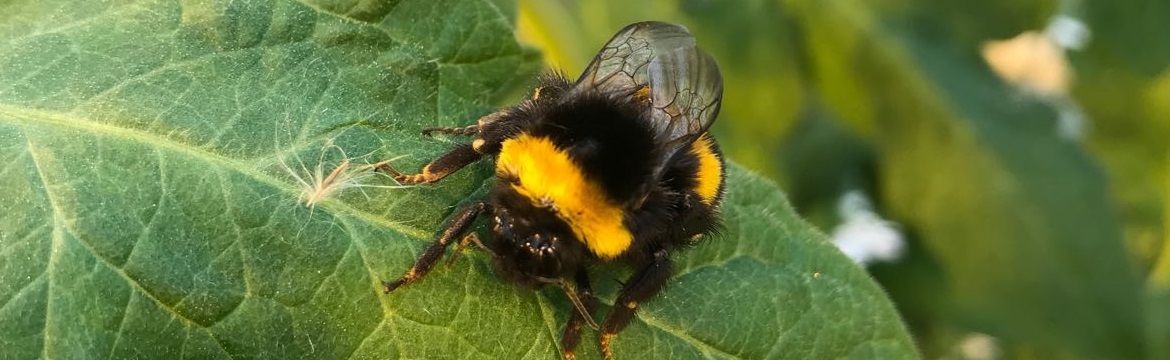
How to use bumblebees in cold periods
In an illuminated crop, artificial light is used during cold periods to achieve a better cultivation result. However, this artificial light affects bumblebees. Bumblebees cannot navigate well with artificial light because it does not contain UV, which prevents them from finding the bumblebee box and eventually dying. Therefore, when using bumblebees in an illuminated crop, a few points should be considered to prevent bumblebees from dying. We list these points and give tips.

Snow and fog
Fog and snow ensure that less natural light enters the greenhouse - and snow also ensures that the light that does enter the greenhouse is enormously bright. This influences the orientation of bumblebees. Heavy fog or snow can cause you to lose 10 - 25%
of your bumble bee population in one day. If you know that fog or snow is coming, take this into account when opening and closing the bumblebee boxes:
- If it is foggy in the morning and the bumblebee boxes are not yet open, postpone this until after the fog.
- If snow is predicted during the day, make sure to close the bumblebee boxes in time.
Place bumblebee boxes higher
In dark periods, you can also choose to place bumblebee boxes higher up in the crop. In this way, the bumble bees capture sunlight earlier in the day, so they can make maximum use of the available light. It also reduces problems of visibility and orientation
on dark days.
If you choose to place the bumblebee boxes higher, it is important that the bumblebee boxes are protected from direct sunlight. If you do not do this, there is a risk that the bumblebees will overheat on days with very intense sunlight. Also make sure that the bumblebee boxes are placed lower down in the crop in time, preferably in the beginning or middle of March (depending on the amount of sunshine).
Spread bumblebee boxes regularly
In addition to raising the height of the bumblebee boxes, it is also advisable to spread the bumblebee boxes regularly along the main path. This way you keep the flying distances as small as possible. Also make sure that the boxes are clearly visible from the main path, so that the bumblebees can easily find them.
Place boxes at the back of the greenhouse
In greenhouses with paths longer than 70 metres, it is advisable to place the bumblebee boxes in at the front of the path and at the back of the path (against the façade). For paths longer than 130 meters you also place a bumblebee box halfway along the path. These measures are intended to reduce the flight distance. Place the bumblebee boxes halfway along the path and against the facade on top of the path so that the bumblebee box is visible.
Related products
Contact form
Can't find your answer? Fill out the contact form and our specialist Kevin van Kester will get back to you. On weekdays, even within 24 hours.
Also interesting
Categories:
How to use bumblebees in cold periods
In an illuminated crop, artificial light is used during cold periods to achieve a better cultivation result. However, this artificial light affects bumblebees. Bumblebees cannot navigate well with artificial light because it does not contain UV, which prevents them from finding the bumblebee box and eventually dying. Therefore, when using bumblebees in an illuminated crop, a few points should be considered to prevent bumblebees from dying. We list these points and give tips.
Search in the Knowledge Center
Find answers to your question in our Knowledge Center. 600+ articles, written by our specialists.
Categories:
Share this article
Topics in this article
Snow and fog
Fog and snow ensure that less natural light enters the greenhouse - and snow also ensures that the light that does enter the greenhouse is enormously bright. This influences the orientation of bumblebees. Heavy fog or snow can cause you to lose 10 - 25%
of your bumble bee population in one day. If you know that fog or snow is coming, take this into account when opening and closing the bumblebee boxes:
- If it is foggy in the morning and the bumblebee boxes are not yet open, postpone this until after the fog.
- If snow is predicted during the day, make sure to close the bumblebee boxes in time.
Place bumblebee boxes higher
In dark periods, you can also choose to place bumblebee boxes higher up in the crop. In this way, the bumble bees capture sunlight earlier in the day, so they can make maximum use of the available light. It also reduces problems of visibility and orientation
on dark days.
If you choose to place the bumblebee boxes higher, it is important that the bumblebee boxes are protected from direct sunlight. If you do not do this, there is a risk that the bumblebees will overheat on days with very intense sunlight. Also make sure that the bumblebee boxes are placed lower down in the crop in time, preferably in the beginning or middle of March (depending on the amount of sunshine).
Spread bumblebee boxes regularly
In addition to raising the height of the bumblebee boxes, it is also advisable to spread the bumblebee boxes regularly along the main path. This way you keep the flying distances as small as possible. Also make sure that the boxes are clearly visible
from the main path, so that the bumblebees can easily find them.
Place boxes at the back of the greenhouse
In greenhouses with paths longer than 70 metres, it is advisable to place the bumblebee boxes in at the front of the path and at the back of the path (against the façade). For paths longer than 130 meters you also place a bumblebee box halfway along the path. These measures are intended to reduce the flight distance. Place the bumblebee boxes halfway along the path and against the facade on top of the path so that the bumblebee box is visible.
Related products
Contact form
Can't find your answer? Fill out the contact form and our specialist Kevin van Kester will get back to you. On weekdays, even within 24 hours.
Also interesting for you
Tips for the usage of bumblebees
Bumblebees ensure effective pollination within a crop. When making use of bumblebees you are dealing with a living product.
Protocol for quality control of bumblebees
The quality of biology is important for effective pollination. This quality is checked by a team of quality controllers before shipment, but when you receive the biology you can choose to check the quality yourself.
What is the difference between bumblebees and bees?
Let’s first explain: bumblebees and bees belong to the same family, the Aphidae. As a consequence, they are very much alike. Still there are some significant differences.
Categories:


Nederland
Arabic ( العربية)
Asia
Australia
Canada
Can-Hub
Česko
Chile
China ( 中国 )
Deutsch
Español
Français
Hortispares
Italy
Japan
Magyar
Mexico
Polski
Portugal
Russian
Scandinavia
Türkçe
United Kingdom
United States
Ireland
Africa
Arabic ( العربية)
Asia
Australia
Canada
Can-Hub
Česko
Chile
China ( 中国 )
Deutsch
Español
Français
Hortispares
Italy
Japan
Magyar
Mexico
Nederlands
Polski
Portugal
Russian
Scandinavia
Türkçe
United Kingdom
United States